
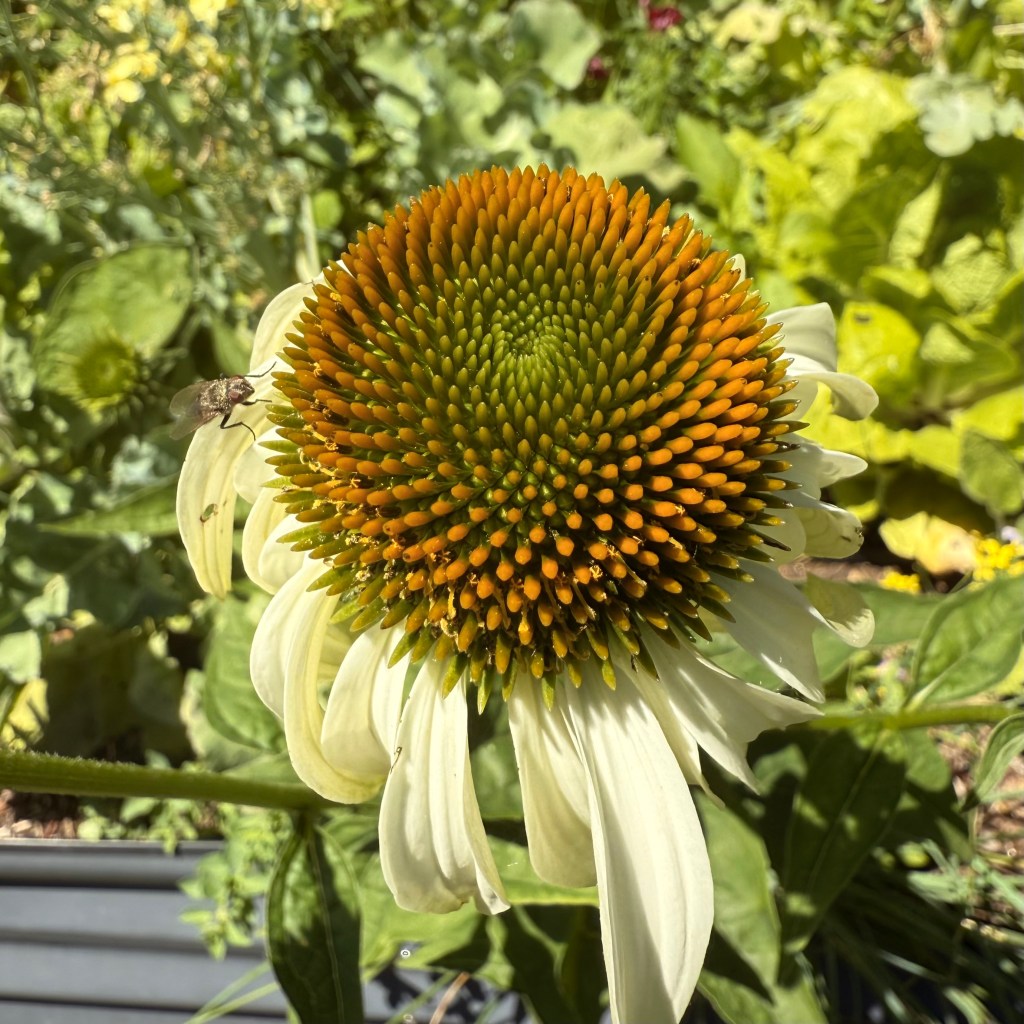
In July, when most gardens sag under the weight of hot, humid air, coneflowers stand tall and proud. Petals not ornate like dahlias, nor dainty like pansies, cling to sturdy stems, like sun-faded flags.
I planted them last spring, with few expectations. But by summer’s end, they had only grown healthy, deep green leaves. I forgot about them come spring, but underground, quietly, they were preparing.
Now, a year later, they’ve sent up bright flares of white petals against the dull heat of July.
Where there was once only foliage, there is a sudden elegance, a reminder: what’s meant to bloom will, in time.
Coneflowers, commonly known as Echinacea, are North American natives, built for poor soils and dry conditions. Their daisy-like blooms have raised central cones and drooping petals that range from pink and purple to white and yellow. Their long-lasting flowers are a staple in pollinator gardens.
Further than just their beauty, echinacea plants support a diverse array of pollinators, from bees and butterflies to even hummingbirds. Later in the season, goldfinches and other birds feed on the dried seed heads, extending the plant’s benefit beyond bloom time.
Once established, coneflowers are drought-tolerant, low-maintenance, and hardy in USDA zones 3-9. They bloom from early summer into fall, providing long-lasting color and support for pollinators. Whether planted in borders or ornamental gardens, they bring strength and softness all at once.
If you are looking to add resilience, color, and ecological benefit to your garden, give coneflowers a chance. Plant them once and they’ll return each year, stronger, brighter, and buzzing with life.


 mulch.blog
Leave a comment