

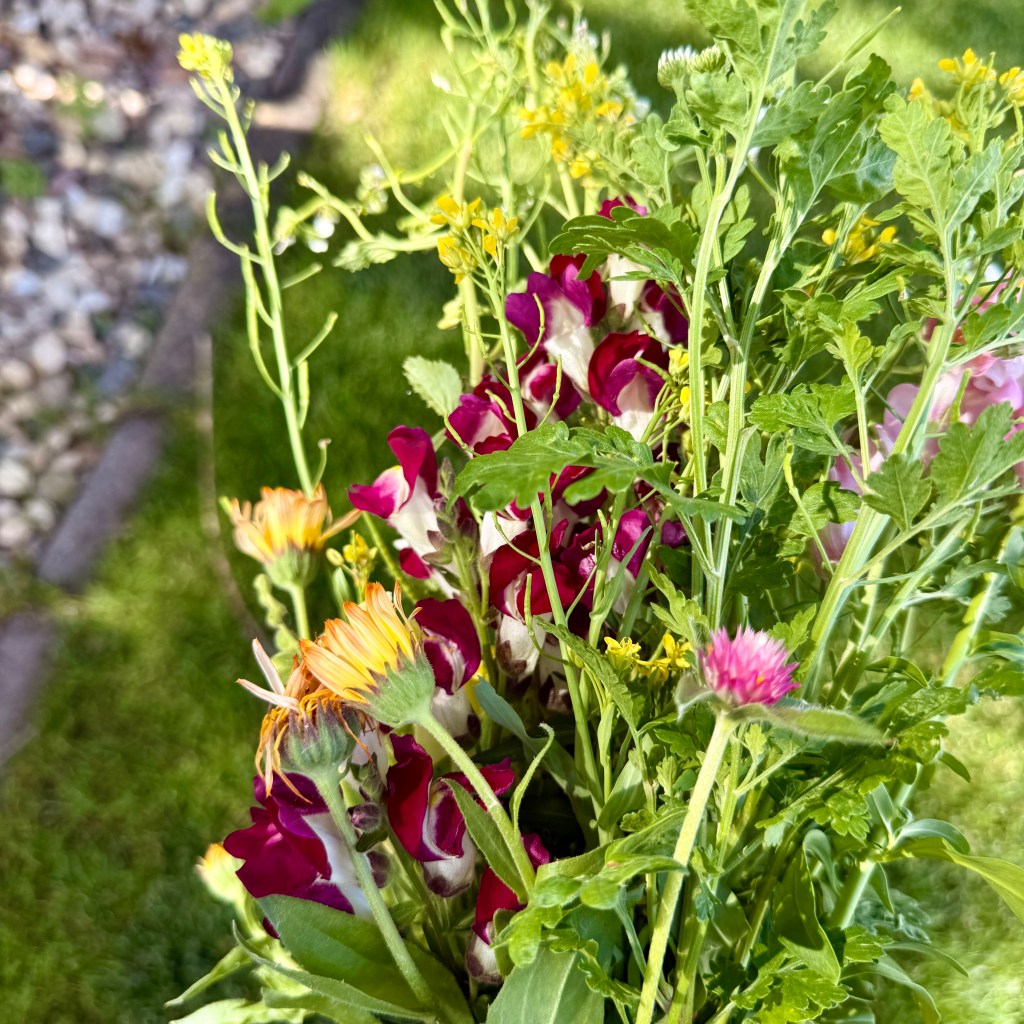
With the end of April bringing warmer weather, it was time to plant the spring garden. This year, I pre-sprouted some white ranunculus corms. This process, involving a couple weeks, a 10×20 tray and some soil, allowed these corms to start their growth in a more controlled environment than the great outdoors. I lined the front of both of my raised bed with these corms, providing some beauty to the rather green garden. In addition to these white blooms, I added some unique black violas (variety: “Back to Black”) and some herbs like sage, thyme, and oregano. In the middle of my raised beds, I added some spinach, arugula, snapdragons, and Napa cabbage. This is my first time growing most of these, and I am excited to see what happens; As of early June, the cabbage is slowly taking over. And in the back of the raised beds, I planted some sweet peas along some tomato trellises for them to vine up. In my garden, I have been practicing intensive planting and polyculture. Intensive planting allows the plants to grow together, covering the soil, allowing soil microbes to thrive, and also creating a living mulch, requiring less water and keeping my plants cool. In addition to the intensive planting, I am practicing polyculture, which is where you place multiple different plants together in one space, limiting the effects of pest pressure and nutrient deficiency. Unlike commercial agriculture and monoculture seen around places like the Midwest, with rows of the same plants, like corn or soybeans, providing the most efficiency, the use of polyculture limits the amount of fertilizers, pesticides, and other synthetic compounds required, leading to a more biodiverse, and healthy ecosystem. In a summary of this post, I would say not only grow a garden to feed yourself, allow it to feed your ecosystem too.
Hello,
I’m Declan

Welcome to Mulch, my blog dedicated to all things gardening. As I document my mistakes, successes, and triumphs, I’ll share them here. Click on “About Me” to learn more.
Stay Connected
Stay updated with my posts and resources by joining my newsletter.
 mulch.blog
Leave a comment